DA Hike Approved at 63%. 8th Pay Commission Arrears Are Not
The Cabinet approved a 3 percentage point DA rise to 63% of basic pay from July 1, 2026. The 8th Pay Commission has filed nothing, so no January 2026 arrears exist.
Verdict: misleading.
Primary source: Terms of Reference of the Eighth Central Pay Commission, notified November 3, 2025 →
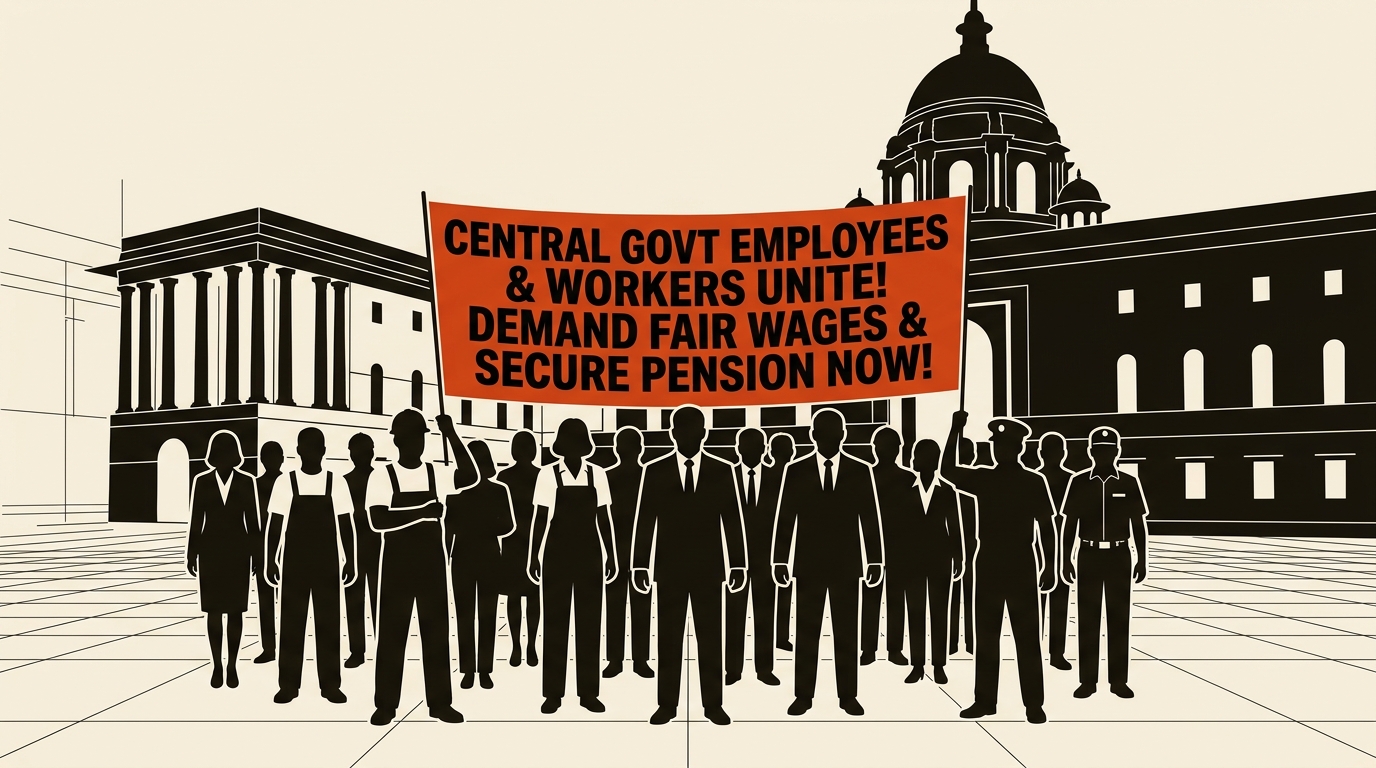
About 48.54 lakh employees and 68.71 lakh pensioners now get a formula-driven allowance revision. A far larger pay revision is still being written by a commission that has not reported.
Short answer: Two different things were merged in the viral posts. The Diwali money is real. On October 28, 2026 the Union Cabinet approved a 3 percentage point increase in dearness allowance for central government employees and dearness relief for pensioners, taking both from 60% to 63% of basic pay and pension with effect from July 1, 2026. The 8th Pay Commission arrears are not real. That commission was notified on November 3, 2025 and has 18 months, to around May 3, 2027, to submit recommendations. It has published none. January 1, 2026 is an anticipated date, not an approved one.
Correction (2026-11-15): This article was first published on October 18, 2026, before the Cabinet took the decision. It now records the approved revision, the two festive bonus schemes sanctioned in October, and the current position of the 8th Pay Commission. The earlier version said the revision was still pending, and cited homepage pages of the Labour Bureau, GoodReturns and the Economic Times instead of the specific reports. The earlier pay-scale table has been replaced with basic-pay figures taken from published calculations.
1. The claim: a DA hike and 8th Pay Commission arrears from January 1, 2026
The viral version of this story did two things at once. It said employees would get a Diwali DA increase, which turned out to be true. It also said the same money would carry retrospective salary arrears from January 1, 2026 under the 8th Pay Commission. That second half has no approval behind it.
The two are different mechanisms. A DA revision is a formula-driven adjustment to an allowance, made twice a year, and it reaches everyone at a given pay level. Pay commission arrears follow a different chain: the commission reports, the government decides on the fitment factor and the effective date, and an order sets the terms. The 8th Central Pay Commission has completed none of those steps.
2. What the Cabinet approved on October 28, 2026
Business Standard reported that the Union Cabinet approved a 3 percentage point increase in DA for central government employees and DR for pensioners, effective July 1, 2026, raising both from 60% to 63% of basic pay and pension. The Indian Express quoted the official release: the combined annual impact on the exchequer is Rs 10,016.10 crore, and the increase benefits about 48.54 lakh central government employees and 68.71 lakh pensioners.
Two details carry most of the weight here. First, this is not a bonus and it is not a one-time payment. It raises the allowance permanently for everyone at each pay level, and the arrears for the period since July 1, 2026 follow separately. Second, the revision is not discretionary. Both Business Standard and the official release state that it follows the accepted formula based on the recommendations of the 7th Pay Commission. Nothing in the approval refers to the 8th Pay Commission.
3. What three percentage points are worth
DA is a percentage of basic pay, so the same three points cost different amounts at different levels. Livemint published these calculations, with Adhil Shetty of BankBazaar supplying the Level 3 and Level 8 examples:
- Basic pay of Rs 18,000: Rs 540 a month, Rs 6,480 a year
- Basic pay of Rs 21,700 (Level 3): Rs 651 a month
- Basic pay of Rs 25,000: Rs 750 a month
- Basic pay of Rs 47,600 (Level 8): Rs 1,428 a month
- Basic pay of Rs 50,000: Rs 1,500 a month
The arrears question is separate from the monthly figure. Shetty’s comment makes the point that arrears are due separately because the new rate applies from July 1, 2026. The sources reviewed here do not fix the final number of arrear months, because that depends on when the arrears order is issued.
4. The other Diwali money is not pay commission money either
Two bonus schemes were sanctioned in October, and the viral posts folded them into the same story.
The Department of Expenditure issued an office memorandum on October 15, 2026 conveying the President’s sanction for a 30-day non-productivity-linked ad-hoc bonus for 2025-26. Livemint reported the calculation. The payout is the lower of an employee’s average monthly emoluments and a Rs 7,000 ceiling, which produces a maximum of Rs 6,908 for 30 days. It covers Group C employees and non-gazetted Group B employees not already covered by a productivity-linked scheme, plus eligible Central Armed Police Forces and Armed Forces personnel, and Union Territory administrations that follow the central emolument structure. The general eligibility rule is at least six months of continuous service in 2025-26 and being in service on March 31, 2026, with pro-rata payment for shorter qualifying service.
Railway staff got a separate scheme. The release published by the Prime Minister’s Office on October 14, 2026 records Cabinet approval of a productivity-linked bonus of 78 days’ wages for Rs 2,009.61 crore, covering 11,40,770 railway employees. The maximum payable amount is Rs 17,951 per eligible employee for 78 days, and it reaches track maintainers, locomotive pilots, train managers, station masters, supervisors, technicians, technician helpers, pointsmen, ministerial staff and other Group C staff.
Both are one-time payments decided by the government on a fixed date each year. Neither depends on the pay commission.
5. Where the 8th Pay Commission actually stands
The record is specific. The Cabinet approved the terms of reference on October 28, 2025, and the Department of Expenditure notified the commission on November 3, 2025. The commission’s own website carries the terms of reference document under that date. The panel has three members: Chairperson Justice Ranjana Prakash Desai, part-time member Professor Pulak Ghosh, and Member-Secretary Pankaj Jain.
CNBC TV18’s review of the commission’s first year, published on November 4, 2026, lays out the sequence. An 18-question questionnaire ran on the MyGov portal from February 5 to March 31, 2026. Memoranda were invited from March 5, 2026, with the deadline extended from April 30 to June 15. Consultations have been held across eleven cities, with the most recent in Mumbai on October 22 and 23, 2026. Guidelines for engaging consultants were issued in April 2026 and partially modified on August 11, 2026.
The critical line is what has not happened. The commission has not announced recommendations on salary revisions, the fitment factor, minimum pay or pension changes. Its 18-month deadline runs to around May 3, 2027. The recommendations still have to be examined and accepted by the government before implementation, and no final salary revision formula, fitment factor or revised minimum basic pay has been announced.
6. So where does January 1, 2026 come from?
Livemint put it plainly on November 5, 2026: the official implementation date has not been announced, and 1 January 2026 is widely anticipated as the date the new pay scales come into effect.
Anticipated is not approved. The 7th Pay Commission round is the precedent people are copying, and it runs the other way. The government accepted that commission’s report before it set a date and allowed arrears to follow. Until the 8th commission reports and the Cabinet decides, no arrears liability can exist. If the implementation date lands where the anticipation points, the arrears would run from that date forward at whatever fitment factor the government sets. Neither number is known today.
The index behind the allowance is worth separating out too. The Labour Bureau’s monthly CPI-IW release for September 2026 puts the index at 155.5 on the 2016=100 base, and that series is the measurement the revision formula tracks. It has nothing to do with the pay structure review, even though the two travel through the same salary slip.
7. The verdict: misleading, with the context that the DA is real
The claim fails on the part that matters most to an employee’s bank balance. There are no 8th Pay Commission arrears from January 1, 2026, because the commission has not reported and no effective date has been approved.
The DA half of the claim is true and the numbers are now official: 60% to 63% of basic pay from July 1, 2026, about 48.54 lakh employees and 68.71 lakh pensioners covered, at an annual cost of Rs 10,016.10 crore. The two festive bonuses are real too, and they are one-time payments of up to Rs 6,908 for most central staff and up to Rs 17,951 for eligible railway staff.
So the money is arriving. What has not arrived is a pay revision. The way to tell those apart is to ask which order you are reading, and you can practise that on our guide to how to read rankings and official numbers or on the bank strike deferral that unions described as a pay settlement.
Sources to check yourself
- Business Standard, October 28: the 3 percentage point increase, the July 1, 2026 effective date and the formula that produced it.
- The Indian Express, October 29: the official release with the Rs 10,016.10 crore annual cost and the employee and pensioner counts.
- Livemint: the basic-pay examples, the Level 3 and Level 8 figures and the note that arrears are due separately.
- CNBC TV18, November 4: the constitution date, the consultation timeline, the May 3, 2027 deadline and the absence of any recommendations so far.
- Livemint, November 5: the statement that no implementation date has been announced and that January 1, 2026 is only anticipated.
- 8th Central Pay Commission, official website: the terms of reference document dated November 3, 2025.
- Prime Minister of India, October 14: the 78-day railway bonus, the Rs 2,009.61 crore outlay and the Rs 17,951 ceiling.
- The Indian Express, October 15: the 11,40,770 employee count for the railway bonus.
- Livemint, October 15: the ad-hoc bonus memorandum, the Rs 6,908 calculation and the eligibility rules.
- Labour Bureau CPI-IW: the September 2026 index reading of 155.5 on the 2016=100 base.
Frequently asked questions
Q: Will central employees receive 8th Pay Commission arrears this Diwali? A: No. The 8th Pay Commission has not submitted its recommendations, and no implementation date has been announced. Its deadline is around May 3, 2027. The Diwali payout covers the July 2026 DA revision and the two bonus schemes.
Q: Is January 1, 2026 confirmed as the 8th Pay Commission effective date? A: No. Livemint reported on November 5, 2026 that the date is widely anticipated but has not been announced. Arrears follow the government’s order, not the anticipation.
Q: How much extra money does an employee on Rs 18,000 basic pay get? A: Rs 540 a month and Rs 6,480 a year, on the published calculation. Arrears from July 1, 2026 are paid separately, and the number of arrear months depends on when the order is issued.
Q: Is the five-day work week settled too? A: Not by these orders. The DA revision and the two bonus schemes are decided and dated. Bank staffing remained a live demand in October, and that dispute was settled separately, as our report on the deferred bank strike documents.
Reader discussion
Conversation for this story opens with memberships. Until then: found an error? Report it — we correct visibly.